Match Situation Football Training for Children

A child can look brilliant in an isolated passing drill, then freeze the moment a defender closes space and team-mates start moving. That gap is exactly why match situation football training for children matters. It helps young players connect technique with real decisions, real pressure and real teamwork - which is where football is actually learned.
For parents, this distinction is important. Children do not just need more touches on the ball. They need the right kind of touches, in the right context, with coaching that teaches them when to pass, when to drive forward, when to protect the ball and when to support a team-mate. For players aged 9 to 15, those habits can make training more enjoyable and matches far less overwhelming.
What match situation football training for children really means
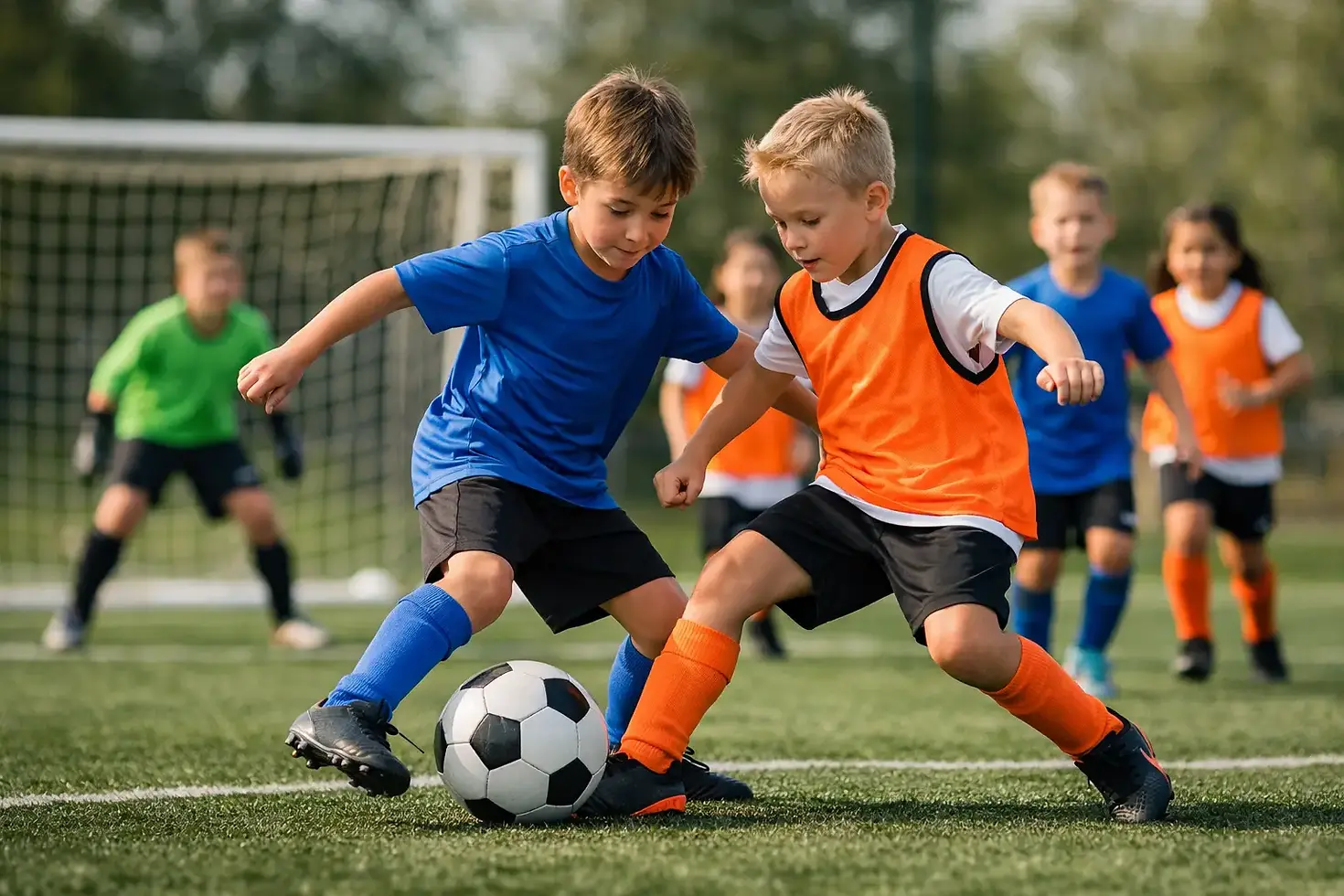
In simple terms, it is training that looks and feels like the game. Instead of repeating a movement without opposition, children practise in scenarios where they must scan, react and choose. That might be a 3v2 counter-attack, a small-sided game with limited touches, or a finishing exercise where the ball arrives under pressure rather than from a static queue.
This does not mean traditional technical work has no value. It does. Young players still need repetition to improve first touch, passing quality, striking technique and ball control. But if training stops there, progress often stays incomplete. A player may know how to pass cleanly, yet still struggle to recognise the best passing option in a crowded area.
That is where situation-based work becomes powerful. It turns skill into usable skill.
Why children progress faster in realistic game scenarios
Children learn football best when the brain and body work together. In a match, they are not only moving. They are processing information constantly - where the space is, who is pressing, where support is coming from, and what might happen next. Good training should reflect that reality.
When coaches use realistic scenarios, children usually improve in three areas at once. First, their technical actions become more relevant. A first touch is no longer just tidy - it is directed away from pressure. Second, their decision-making sharpens. They start to understand why one choice works better than another. Third, confidence grows. A child who has already solved similar situations in training enters matches calmer and more prepared.
There is also an emotional benefit. Many children enjoy this type of training more because it feels like football rather than exercise for its own sake. The sessions are often more dynamic, more social and more engaging. That matters, especially during holidays, when parents want structured development without taking the joy out of the game.
The key benefits of match situation football training for children
One of the biggest benefits is game intelligence. Young players begin to read patterns earlier. They notice when to spread wide, when to close central space, and when to move quickly after losing possession. These are not abstract concepts when taught well. They become habits built through repetition in context.
Another major benefit is speed of decision. Children rarely struggle because they are unwilling. More often, they struggle because the game moves faster than their thinking. Situation-based drills train them to recognise cues sooner. Over time, that small improvement can change everything. The player who hesitated now releases the pass at the right moment.
It also supports teamwork. Isolated drills can improve individual technique, but they do not always teach timing with others. Match scenarios do. Children learn angles of support, communication, defensive cover and collective effort. This is especially valuable for players who are enthusiastic but still learning how to function within a team.
Finally, this approach can reduce frustration. A child who keeps hearing “lift your head” in matches may not know how. In the right training design, scanning, awareness and decision-making are coached in a practical way, not just demanded.
What good session design looks like
Effective sessions are not chaotic. They are carefully built to suit the child’s age, level and confidence. For younger players, the best format is often simple: small areas, clear objectives and plenty of repetition. For older children, exercises can become more layered, with transitions, overloads and more tactical detail.
A strong session usually starts with a technical focus, then quickly places that skill into a game context. For example, a coach may begin with receiving and passing, then move into a directional possession game, and later into a small-sided match where the same receiving principles are rewarded. That progression helps children understand the link between practice and play.
The coach’s role is just as important as the exercise itself. Too much stopping can break rhythm. Too little guidance can leave learning to chance. The best balance is active coaching with short, clear interventions. Children need encouragement, correction and freedom in the right measure.
Common examples that work well for ages 9 to 15
Small-sided games are often the most effective tool because they multiply involvement. In an 11-a-side match, some children can disappear for long spells. In 3v3, 4v4 or 5v5 formats, everyone attacks, defends and makes repeated decisions. That means more learning in less time.
Transition games are another excellent choice. These teach children to react immediately when possession changes. That moment is often where matches are won or lost, yet many young players only learn it late. Working on these scenarios helps them become more alert, more resilient and more connected to the team.
Finishing under pressure also matters. Shooting without defenders has a place, but children need chances to finish while adjusting body shape, dealing with pressure and choosing quickly. The same applies to defending. A player improves faster when learning to defend live situations rather than only copying movements without an opponent.
Still, it depends on the child. Some players need more confidence before entering highly competitive scenarios. Others thrive on challenge straight away. Good coaching recognises that development is not identical for every child.
Why this matters during a football camp
A well-run football camp is one of the best environments for this kind of learning. Children train consistently over several days, which gives coaches time to reinforce habits and build progression. They can practise a theme, revisit it in different formats, then apply it in tournament play.
That rhythm is especially useful during school holidays. Parents often want more than childcare or casual activity. They want their child to be active, safe, improving and happy. Match-based training answers that need because it combines serious coaching with the natural excitement of playing.
At KIDOOFOOT, this balance is central to the camp experience. Children aged 9 to 15 work on technique every day, but they also learn through realistic game situations, guided by experienced coaches and former professional players. That makes progress more visible, while keeping sessions lively, social and age-appropriate.
The setting matters too. When children train in a positive holiday environment, they are often more open, more confident and more willing to try. Add professional supervision, a clear structure and strong educational values, and football becomes more than a sport session. It becomes a meaningful part of their development.
What parents should look for in match situation football training children can benefit from
Not every session described as match-based is genuinely educational. Parents should look at whether the activities are adapted to age and level, whether children are coached rather than simply left to play, and whether the environment feels encouraging as well as demanding.
It is also worth asking what success looks like. If training is only about winning the drill, some children may hide or rely on stronger players. A better approach rewards decision-making, effort, communication and progression. That helps all children improve, not just the most advanced ones.
The quality of supervision is another key point. Young players need structure, safety and coaches who understand both football and child development. The best programmes create challenge without pressure, discipline without fear and ambition without losing the pleasure of the game.
There is room here for wider values as well. Responsibility, respect and teamwork should not sit outside football training. They should be part of it. When children learn in an environment that also promotes awareness of others and care for their surroundings, the experience becomes richer and more lasting.
Football is full of fast moments and small choices. Children do not learn to handle those moments by standing in a queue for too long. They learn by playing, thinking, trying again and being guided well. When training reflects the reality of the game, progress tends to feel more natural - and much more enjoyable.


Commentaires