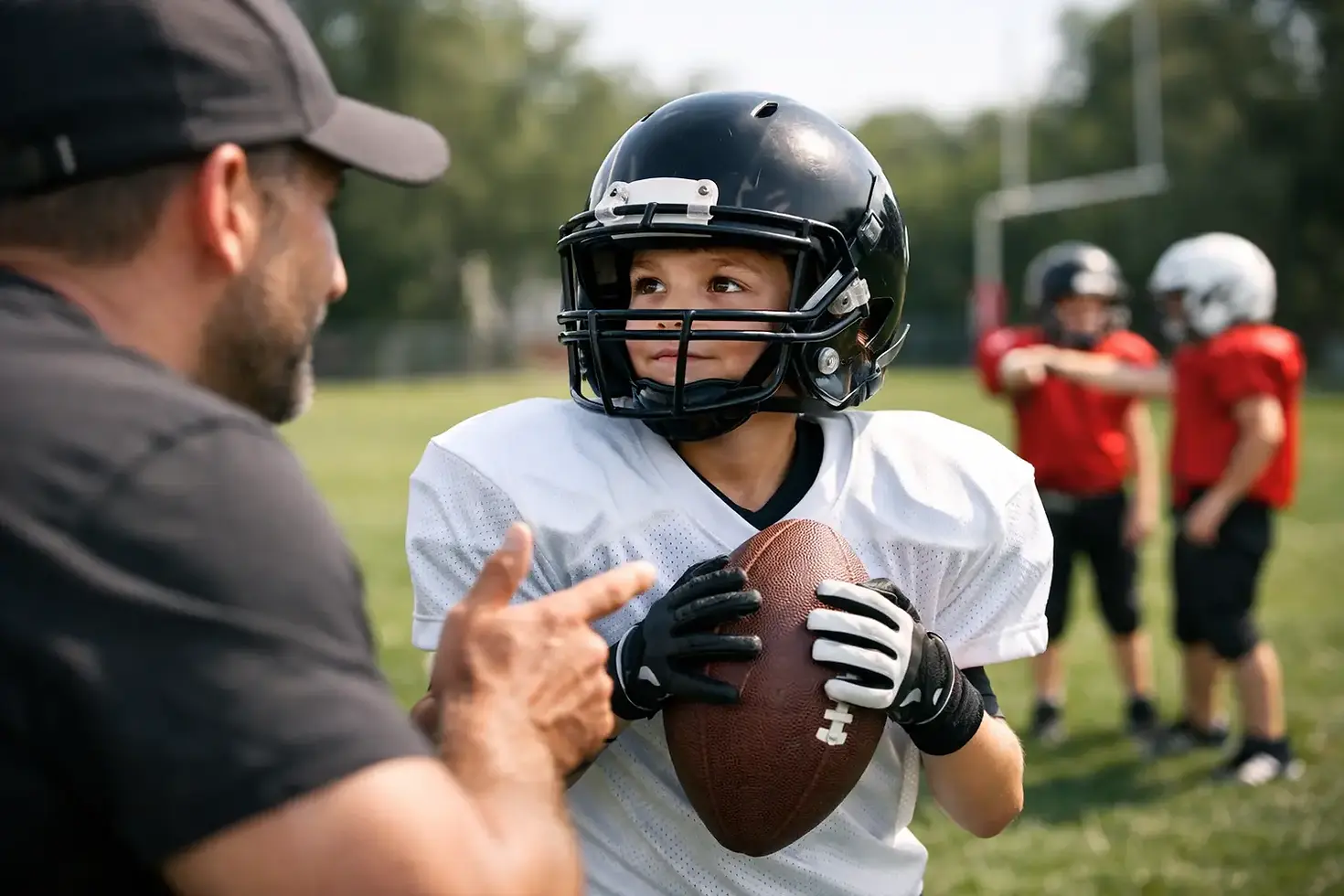
How Children Learn Discipline Through Football

A child arrives at training full of energy, eager to score goals and be the first to touch the ball. By the end of the session, they have waited their turn, listened to an instruction, supported a teammate and kept trying after a missed pass. That is how children learn discipline through football: not through lectures, but through repeated, meaningful moments on the pitch.
For parents, discipline should never mean taking the joy out of sport. At its best, it helps a young player feel confident, dependable and ready to contribute to a group. Football gives children aged 9 to 15 a practical setting in which effort, respect and self-control have an immediate purpose.
Why children learn discipline through football
Football is fast, social and full of decisions. A player cannot simply do what they want and expect the game to work. They need to follow the session rules, respond to the coach, respect the referee and understand that every position has a responsibility.
This makes discipline tangible. If a child arrives late, they miss the warm-up and may not feel ready for the first exercise. If they stop tracking back after losing possession, the team is exposed. If they argue with a teammate instead of resetting, the next action is harder. These are not abstract lessons. They are clear cause and effect, experienced in real time.
The most valuable learning happens when adults frame these moments calmly. A coach does not need to shame a child for switching off. They can ask, “What could you do differently on the next play?” This approach turns a mistake into a responsibility, while protecting the child’s enjoyment and willingness to learn.
Discipline starts with routines, not pressure
Children respond well when they know what is expected of them. A well-organised football session has a simple rhythm: arrive prepared, greet the group, warm up properly, listen to the task, practise with focus, recover, then reflect. Repeating this structure helps young players manage themselves.
Preparation is often the first visible sign of growing discipline. Packing football boots, a water bottle and suitable kit before training may seem minor, but it teaches children to take ownership. During a holiday football camp, this becomes especially useful. They learn to be ready for a full day of activity while enjoying time outdoors with new friends.
Routines must still leave room for personality. Some children are naturally focused from the first whistle; others need a friendly reminder, a clear goal or a coach who helps them settle. The aim is not to make every child behave in exactly the same way. It is to give each one tools to become more responsible over time.
Listening is an active football skill
Listening on the pitch is not about standing silently. It means taking in information and applying it. A coach may demonstrate how to open the body before receiving a pass, explain a pressing trigger or set a rule for a small-sided game. The player then has to remember it while moving, competing and communicating.
This kind of concentration develops gradually. Short instructions, demonstrations and regular feedback work better than long speeches. When children understand why an instruction helps them play better, they are far more likely to engage with it.
Self-control matters after mistakes
Every young footballer will miscontrol the ball, miss a chance or lose a tackle. The disciplined response is not perfection. It is the ability to recover: take a breath, react quickly and stay connected to the game.
Football provides safe opportunities to practise this emotional control. A child can feel disappointed, frustrated or nervous, yet still learn to make the next pass, encourage a teammate or respect a decision they dislike. These habits can support them at school, at home and in other group activities.
Respect gives discipline its meaning
Rules only become educational when children understand the people behind them. Respect for a coach means giving attention when the group needs direction. Respect for teammates means sharing the ball, using encouraging language and recognising that others are learning too. Respect for opponents means competing honestly without trying to humiliate anyone.
The referee is another important lesson. Young players will not always agree with a decision, and that is normal. Learning to accept it, reset and carry on is part of becoming a mature sportsperson. Adults should model this standard themselves. Children notice how coaches and parents react from the touchline.
A positive football environment does not ignore poor behaviour. It addresses it clearly and fairly. If a player repeatedly interrupts, refuses to follow a safety rule or speaks disrespectfully, there should be a calm consequence and a chance to repair the situation. Discipline is strongest when it combines boundaries with the opportunity to do better.
Teamwork makes effort visible
In an individual activity, a child may be tempted to give up when a task feels difficult. In football, their effort affects others. Tracking back, offering a passing option, taking a turn in goal or helping to collect equipment all show a player that their contribution matters.
That is why small-sided games are so powerful for learning. With fewer players, everyone has more touches, more decisions and more responsibility. A child quickly sees that a team works best when players communicate, remain patient and keep their commitments.
Winning can motivate children, but it should not be the only measure of success. A final tournament can be exciting and memorable when it rewards good play, teamwork and perseverance alongside results. The child who encourages others after conceding may be showing just as much progress as the child who scores.
How parents can reinforce football discipline at home
Parents do not need to turn every car journey home into a performance review. A few thoughtful questions are more helpful than a detailed critique of passes, tackles or goals. Ask what the child enjoyed, what challenged them and whether they helped a teammate. This keeps the focus on learning rather than pressure.
It also helps to praise behaviours that children can control: arriving prepared, listening carefully, trying again and being kind to others. “I noticed you kept working after that mistake” is more useful than praise based only on talent or a scoreline.
There will be days when a child does not want to train, struggles to concentrate or feels disappointed. Consistency matters, but so does context. A tired child after a busy school week may need rest. A child who repeatedly avoids sessions may need a conversation about confidence, friendships or whether the activity still feels right. Discipline is not forcing attendance at any cost. It is learning to make thoughtful commitments and communicate honestly.
A holiday camp can strengthen positive habits
A structured football camp gives children a focused period in which to build these habits day after day. Daily technical work teaches patience. Match situations teach quick decisions and accountability. A group setting encourages social confidence, while professional supervision gives parents reassurance that expectations are clear and age-appropriate.
At KIDOOFOOT, children can experience this balance through football training, team challenges and an eco-responsible approach that extends responsibility beyond the pitch. Looking after shared equipment, reducing waste and respecting outdoor spaces are practical reminders that discipline also includes caring for the environment and the people around us.
The best football memories are rarely only about a winning goal. Children remember the teammate who helped them, the skill they finally learnt and the moment they realised they could stay calm, work hard and try again. Give them a positive place to practise those moments, and the habits can travel far beyond the football pitch.


Commentaires